Bathroom Renovation Cost in London: Full 2026 Breakdown
What a bathroom renovation really costs in London, from like-for-like refreshes to full gut-and-redesign projects, with hidden costs exposed.
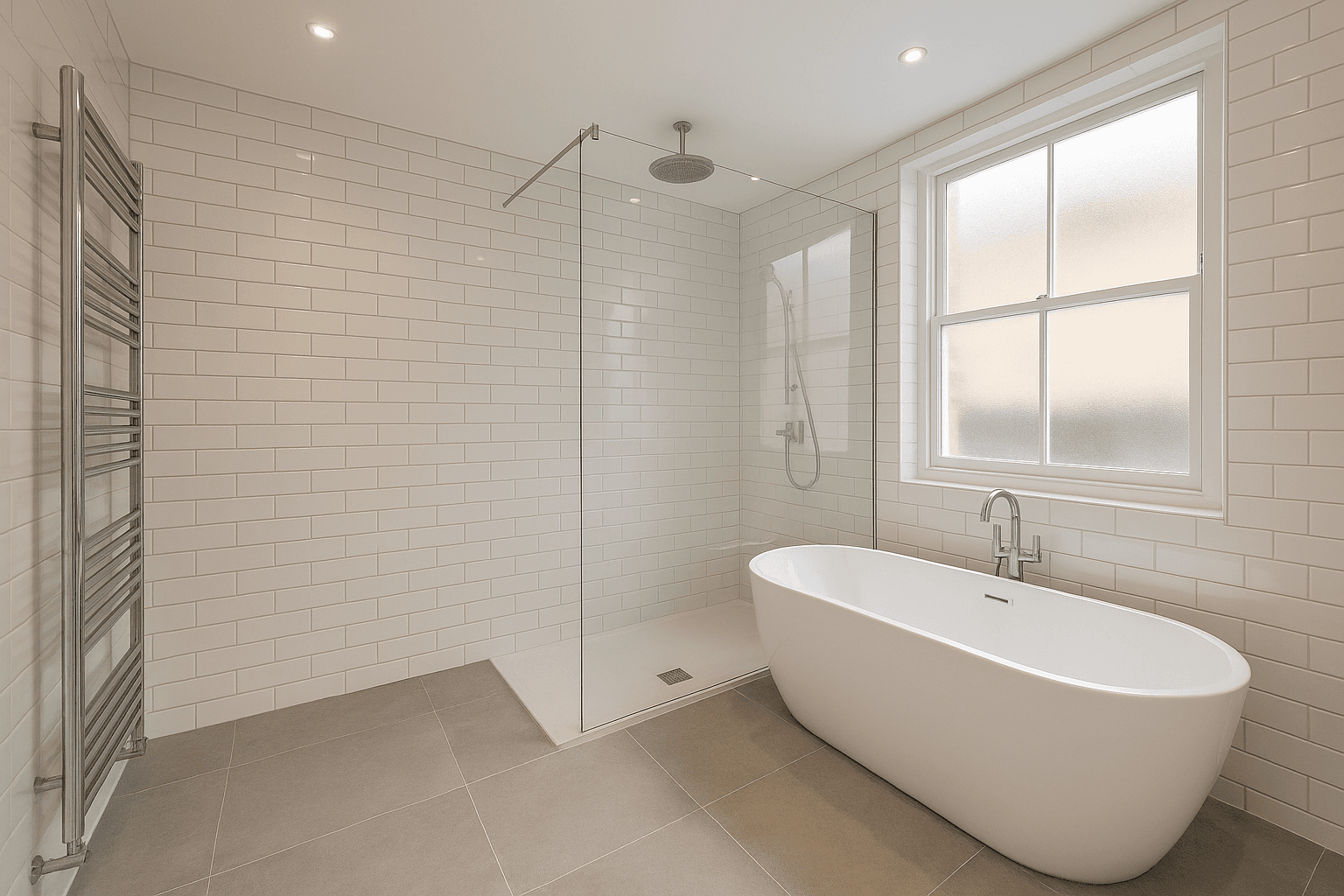
I'll be honest with you: bathrooms are where I see the biggest gap between what people budget and what they end up spending. Every month I get calls from homeowners who've been quoted £4,000 for a "full bathroom renovation" and can't understand why my price is double that. The answer is always the same: the cheap quote doesn't include half the work that actually needs doing. So let me walk you through what a bathroom renovation really costs in London in 2026, with nothing left out.
Bathroom Renovation Costs at a Glance
These figures are based on projects we've completed across Greater London this year. They include all labour, materials, disposal, and the finishes you'd actually want to live with. VAT included.
| Project Type | Cost Range (2026) | Typical Timeline |
|---|---|---|
| Like-for-like refresh | £5,000 – £8,000 | 1–2 weeks |
| Full renovation (new layout) | £8,000 – £15,000 | 2–3 weeks |
| En-suite installation (new room) | £10,000 – £18,000 | 2–4 weeks |
| Wet room conversion | £12,000 – £22,000 | 3–4 weeks |
| High-spec luxury bathroom | £20,000 – £35,000+ | 3–5 weeks |
💡 Builder's Truth: That £3,000 quote you saw on a comparison website? It assumes your plumbing is in the right place, your walls are straight, and your floor joists are solid. In a London property built before 1960, none of those things are guaranteed. Budget for reality, not for best-case.
Where Does the Money Actually Go?
Let me break down a typical mid-range full bathroom renovation costing around £12,000, so you can see exactly where every pound goes.
| Cost Element | Typical Range | Notes |
|---|---|---|
| Strip-out and disposal | £600 – £1,200 | Old suite, tiles, and debris removal |
| Plumbing (first and second fix) | £1,500 – £3,500 | More if moving waste or supply pipes |
| Electrics | £500 – £1,200 | Lighting, extractor, heated towel rail, shaver socket |
| Tiling (walls and floor) | £1,500 – £3,000 | Labour intensive; large format tiles cost more to lay |
| Sanitaryware (bath, shower, toilet, basin) | £1,200 – £4,000 | Huge range: budget to boutique |
| Plastering and prep | £400 – £900 | Tanking, waterproof boarding, wall prep |
| Decoration and finishing | £300 – £600 | Painting, silicone, sealant, accessories |
| Underfloor heating (optional) | £400 – £900 | Electric mats for bathrooms; cheap to run |
You'll notice labour makes up a large chunk: around 40–50% of the total. That's because a bathroom renovation is one of the most trade-intensive jobs in a house. You need a plumber, electrician, tiler, plasterer, and often a carpenter, all coordinating in a small space. Getting that coordination wrong is how bathrooms end up taking six weeks instead of three.
Hidden Costs That Catch Homeowners Out
This is the section most cost guides skip. In my experience, roughly one in three London bathroom renovations uncovers at least one of these:
- Rotten floor joists: Older London houses often have leaky baths or showers that have been quietly rotting the joists for years. Once we strip the floor, we find timber that crumbles in your hand. Repair: £500–£2,000 depending on how much has gone.
- Asbestos in artex ceilings: Pre-1990s London houses often have artex textured coatings on bathroom ceilings that contain asbestos. Professional removal: £300–£800. You cannot legally remove this yourself.
- Soil pipe relocation: If you want to move the toilet to a different wall, the cast iron soil pipe often needs re-routing. That's a plumber for a full day, plus the materials: £600–£1,500.
- Inadequate water pressure: A gorgeous rainfall shower is pointless if your boiler can't deliver the flow rate. You might need a new boiler or a pump: £300–£1,500 depending on the solution.
- Electrical board upgrade: If the bathroom needs a new circuit and your consumer unit is full or outdated, budget £500–£1,200 for an upgrade.
- Damp behind tiles: I've pulled tiles off and found black mould running halfway up the wall. The plasterboard needs replacing, and the cause needs fixing first. Add £400–£1,000.
💡 Builder's Truth: In Victorian and Edwardian houses across Lewisham, Hackney, and Islington, I always tell clients to budget an extra 15–20% contingency for bathroom work. These properties have had 100+ years of bodge jobs layered on top of each other. The only certainty is that something will surprise us once we open up the walls.
What Affects the Price Most?
1. Layout Changes
Keeping everything in the same position (like-for-like) is the cheapest approach. The moment you want to move the toilet, reposition the shower, or swap the bath to the other wall, plumbing costs jump. Moving waste pipes is fiddly work, especially in older properties where the joists run the wrong way.
2. Tile Choice and Coverage
Floor-to-ceiling tiling in a full bathroom uses 15–25 square metres of tiles. At £30–£60 per sqm for decent porcelain, that's £450–£1,500 just for the tiles. Large-format tiles (600x600mm or bigger) look stunning but are harder to cut and lay, so the labour costs more. Then add adhesive, grout, and trims.
3. Sanitaryware Quality
The toilet, basin, bath, and shower enclosure can range from £800 for a perfectly functional set from a trade supplier to £5,000+ for designer brands. My honest advice: spend money on the shower valve and the bath. These are the things you touch every day. The toilet and basin can be mid-range without anyone noticing.
4. Access and Property Type
A ground-floor bathroom in a detached house is straightforward. A second-floor bathroom in a Victorian terrace in Wandsworth with narrow stairs and no rear access? Everything takes longer, costs more to get materials in, and generates more waste to carry out. I've had jobs where carrying the bath upstairs added half a day.
Timeline: How Long Does a Bathroom Actually Take?
Here's what to realistically expect, assuming no major surprises:
- Day 1–2: Strip-out: old suite removed, tiles hacked off, floor up if needed
- Day 3–4: First fix plumbing and electrics: new pipe runs, wiring for lights and extractor
- Day 5–6: Plastering, waterproof boarding, floor prep, underfloor heating mats if fitted
- Day 7–10: Tiling: walls first, then floor. This is the longest single stage.
- Day 11–12: Second fix: suite installed, shower screen fitted, towel rail connected, extractor wired
- Day 13–14: Finishing: silicone, grouting touch-ups, painting ceiling, door refitting, snagging
That's 2–3 weeks for a full renovation. A like-for-like refresh where nothing moves can be done in 5–7 working days. A complex en-suite carved out of a bedroom with new drainage? 3–4 weeks minimum.
Is a Bathroom Renovation Worth the Investment?
In terms of property value, a modern, well-finished bathroom is one of the first things buyers and estate agents look at. A dated bathroom with cracked tiles and a stained bath actively devalues your home. I've seen properties in Streatham and Bromley where a £12,000 bathroom renovation helped the seller achieve £20,000–£30,000 more on the asking price, because buyers could move straight in without worrying about immediate work.
But here's the nuance: a gold-plated bathroom in a modest property doesn't pay back. A £30,000 bathroom in a £400,000 house is over-capitalising. Match the spec to the property. Mid-range, well-executed work gives you the best return.
If you're weighing up where to spend money on your home, compare kitchen extension costs with bathroom renovation costs. Both add value, but kitchens tend to have a higher return if you're planning to sell within a few years. If you're staying, do the bathroom: you'll use it every single day.
Choosing the Right Team
Bathroom renovations require multiple trades working in tight coordination. A solo tradesperson who advertises "bathroom fitting" often means one person who subcontracts the electrics, tiles, and plumbing to whoever is available that week. The result is delays and miscommunication.
I've written a detailed guide on how to choose a reliable builder in London that covers what to look for. The short version: ask for recent bathroom projects specifically, check they have their own plumber and tiler, and make sure payment is tied to stages not dates.
💡 Builder's Truth: If a bathroom fitter tells you they "don't need building regulations sign-off", be cautious. Any new electrical work in a bathroom must comply with Part P. Any structural changes need building control. And if you're adding an en-suite in a loft conversion, the drainage and ventilation all need approval. The certificates matter when you sell.
How to Keep Costs Under Control
- Keep the layout: If your current positions work, don't move things for the sake of it. Moving a toilet from one wall to another can easily add £1,000–£2,000.
- Buy your own sanitaryware: Most builders get trade discounts, but shop around. I've had clients find suites at 40% off in sales at Victorian Plumbing or Better Bathrooms. Just check the dimensions match before ordering.
- Don't over-tile: Full floor-to-ceiling tiling is premium. Tiling to dado height (1.2m) with painted walls above is a classic London look that saves £500–£1,000.
- Choose standard sizes: A 1,700mm bath fits most London bathrooms. Going bespoke on dimensions means bespoke pricing on everything from the bath panel to the shower screen.
- Plan early: Rush jobs cost more. Give your builder 6–8 weeks lead time and they can schedule properly, order materials at the best price, and avoid weekend work surcharges.
Thinking About a Bathroom Renovation?
Whether you're after a quick refresh or a complete gut-and-redesign, I'm happy to pop round, take a look at what you've got, and give you an honest idea of costs. 27+ years of experience, no obligation, no hard sell: just straight answers from someone who does this every week.
Chat with Pimi on WhatsAppWe typically reply within minutes during working hours.
Ready to discuss your project?
Whether you are just exploring ideas or ready to get started, Pimi and the crew are happy to help. With more than 27 years in the business and 120 plus projects delivered, they can guide you at any stage of your journey.
No hard sell and no obligation, just straightforward advice from a team that goes above and beyond.
- Answer questions about costs, timelines and feasibility
- Provide ballpark price ranges based on your requirements
- Explain the process before you commit to anything
- Arrange a free site visit if you want to move forward