Modern Kitchen Trends in London for 2026
What London homeowners are actually choosing in 2026: colours, handleless cabinets, induction, boiling taps, and more, from a builder on the ground.
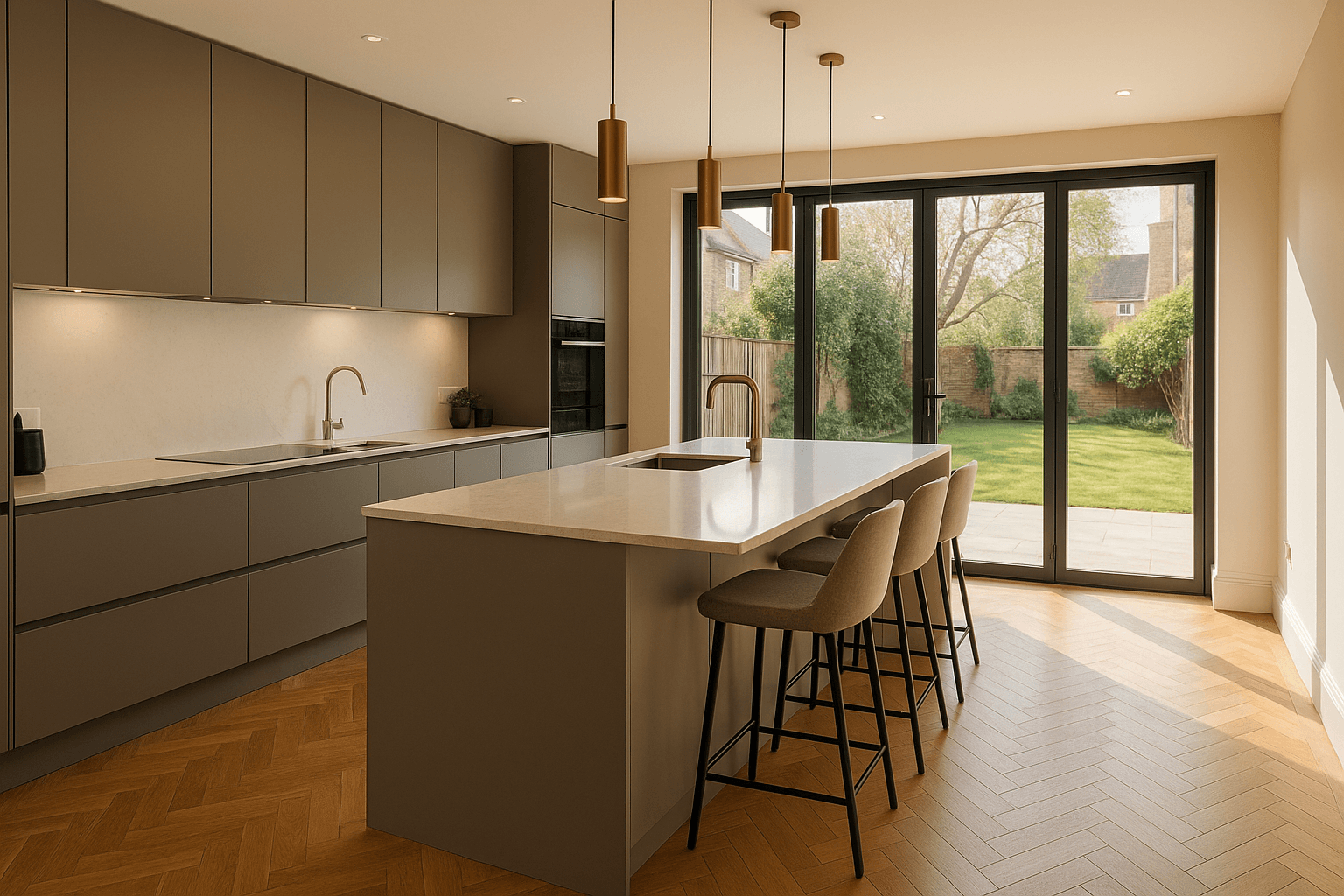
I've been fitting kitchens across London for 27 years, and I'll tell you something: trends come and go, but a well-designed kitchen lasts decades. That said, the kitchens I'm building in 2026 look noticeably different from those I was building five years ago. Some changes are cosmetic; others reflect genuine shifts in how London families cook and live. Here's what I'm seeing on the ground, not from design magazines, but from actual kitchens I'm building right now.
1. Handleless Cabinets with Push-to-Open or J-Pull
The handleless look has gone from "high-end German kitchen only" to standard across all price points. Howdens, Wren, and most trade suppliers now offer handleless ranges. The result is clean lines, easier cleaning (no handles collecting grime), and a contemporary feel that works even in traditional London properties.
Two main options: push-to-open mechanisms (completely flat doors) or J-pull (a groove cut into the top edge of the door). Push-to-open is sleeker but relies on mechanisms that can occasionally fail. J-pull is simpler and equally effective. I fit more J-pull systems because they're reliable and feel solid.
2. Dark Colours and Natural Tones
The all-white kitchen had a good run, but it's fading. In 2026, I'm seeing clients across Wandsworth, Islington, and Hackney consistently choosing:
- Deep greens: Forest green, sage, and olive are everywhere. Works beautifully with brass or brushed gold hardware.
- Charcoal and graphite: Dark base units with lighter wall units or open shelving creates depth without making the room feel small.
- Warm neutrals: Mushroom, greige, and warm taupe replace the cold greys that dominated five years ago.
- Natural wood: Oak-fronted units, either solid or veneer, bring warmth. Especially popular as island fronts paired with painted perimeter units.
My practical note: dark kitchens need good lighting. If your kitchen doesn't get much natural light (and many London galley kitchens don't), go dark on the base units and keep the wall units or splashback lighter. That contrast is what makes it work, not painting everything black.
💡 Builder's Truth: Matt finish doors look gorgeous in showrooms. In a family kitchen, they show every fingerprint, especially in dark colours. If you've got young children, consider a soft-matt or silk finish instead: same look from a distance, but far more forgiving when little hands are involved. I've re-sprayed more than a few kitchen doors for clients who discovered this too late.
3. Induction Hobs and the Death of Gas
The shift to induction is accelerating. About 60% of the kitchens I fit now go induction over gas. The reasons are practical: faster heating, more precise control, easier to clean, and the new generation of induction hobs with flex zones are genuinely impressive.
The catch? As I've mentioned in my kitchen renovation cost guide, induction hobs draw serious power. You'll likely need a dedicated 32A circuit and possibly an upgrade to your electrical supply. Factor in £500–£1,500 for the electrical work beyond the hob cost itself.
For dedicated cooks who want gas: consider a gas cooktop with an induction zone alongside it. Best of both worlds, and entirely possible if your kitchen layout accommodates it.
4. Boiling Water Taps
Quooker, Grohe Blue, and similar instant boiling/filtered water taps have gone from luxury to near-standard in London kitchens. A Quooker Flex starts around £1,100 installed; the Fusion (combined hot, cold, and boiling) is £1,300–£1,600.
Worth it? Honestly, yes, if you drink a lot of tea, cook with boiling water regularly, and want to free up worktop space by ditching the kettle. The tank sits under the sink and draws about the same power as a light bulb to keep water at temperature. The one caveat: the filters need replacing every 6–12 months at about £50 each.
5. Integrated Appliances and Hidden Technology
The trend is towards hiding everything. Integrated fridge-freezers, dishwashers behind cabinet fronts, and even integrated coffee machines are now common requests. The goal is a kitchen that looks like furniture rather than an appliance showroom.
This extends to plug sockets: pop-up sockets in the worktop or on the island (£80–£200 each) keep the splashback clean. Wireless charging pads built into the worktop (£100–£150) eliminate visible cables. These details add up but create a genuinely polished finish.
6. Open Shelving and Display Storage
Full runs of wall cabinets are giving way to a mix of closed and open storage. Floating timber shelves (matching the island or worktop) display ceramics, plants, and cookbooks. It breaks up the wall visually and makes the kitchen feel less "fitted" and more bespoke.
The practical compromise I recommend: open shelving in display areas (away from the hob) and closed cabinets where you need to hide the less photogenic stuff. Nobody wants their Tupperware collection on show.
💡 Builder's Truth: Open shelving near a hob is a nightmare. Cooking grease travels further than you think, and those beautiful white plates will need washing every week even if you don't use them. Keep open shelving at least 1.5 metres from the cooking zone, or resign yourself to constant cleaning.
7. Pantry Cupboards and Larder Units
The walk-in pantry has made a comeback, even in London kitchens where space is tight. If you can't spare the square footage for a separate pantry room, a tall larder unit with internal shelving, pull-out baskets, and spice racks achieves the same purpose.
A well-designed full-height larder (600mm wide, 2100mm tall) holds an astonishing amount and keeps clutter off the worktops. These cost £800–£2,000 depending on the supplier and internal fittings. Worth every penny for organised cooks.
8. Statement Extraction
Downdraft extractors (built into the worktop behind the hob) and ceiling-mounted extractors are replacing traditional chimney hoods. They're especially popular in open-plan kitchen extensions where a bulky hood would block the sightlines.
A downdraft extractor costs £800–£2,500 depending on the brand (Bora and Neff are the most popular). They work well for light to moderate cooking, but if you regularly do high-heat searing or wok cooking, a powerful overhead hood still performs better. I always have this conversation with clients before the kitchen is designed; the extraction choice affects the layout.
What I'd Actually Choose
If I were fitting my own kitchen tomorrow, here's what I'd do:
- Handleless Howdens units in a warm grey-green, J-pull profile
- 20mm quartz worktop in a light marble-effect, with matching upstand
- Induction hob with a decent overhead extractor (Neff or AEG)
- Quooker Flex in brushed nickel
- Integrated fridge-freezer and dishwasher
- Two floating oak shelves for display
- Full-height larder unit with pull-out baskets
- Under-cabinet LED lighting on a dimmer and plinth lighting
Total for a kitchen like that in a typical London property? Around £18,000–£25,000 including all building works, electrics, plumbing, tiling, and fitting. That's the sweet spot where you get quality that lasts without over-capitalising. For a full breakdown of what things cost, see my kitchen upgrades service page.
Inspired by Something Here?
If any of these ideas have got you thinking about your own kitchen, I'm happy to chat through what's realistic for your space and budget. Send me some photos and I'll give you honest feedback on what would work. 27+ years of fitting kitchens across London: I've worked with every layout, every supplier, and every budget.
Chat with Pimi on WhatsAppWe typically reply within minutes during working hours.
Ready to discuss your project?
Whether you are just exploring ideas or ready to get started, Pimi and the crew are happy to help. With more than 27 years in the business and 120 plus projects delivered, they can guide you at any stage of your journey.
No hard sell and no obligation, just straightforward advice from a team that goes above and beyond.
- Answer questions about costs, timelines and feasibility
- Provide ballpark price ranges based on your requirements
- Explain the process before you commit to anything
- Arrange a free site visit if you want to move forward