Wet Room vs Traditional Bathroom: Which Is Right for You?
An honest comparison of wet rooms and traditional bathrooms covering cost, maintenance, resale value, and which suits your London property.
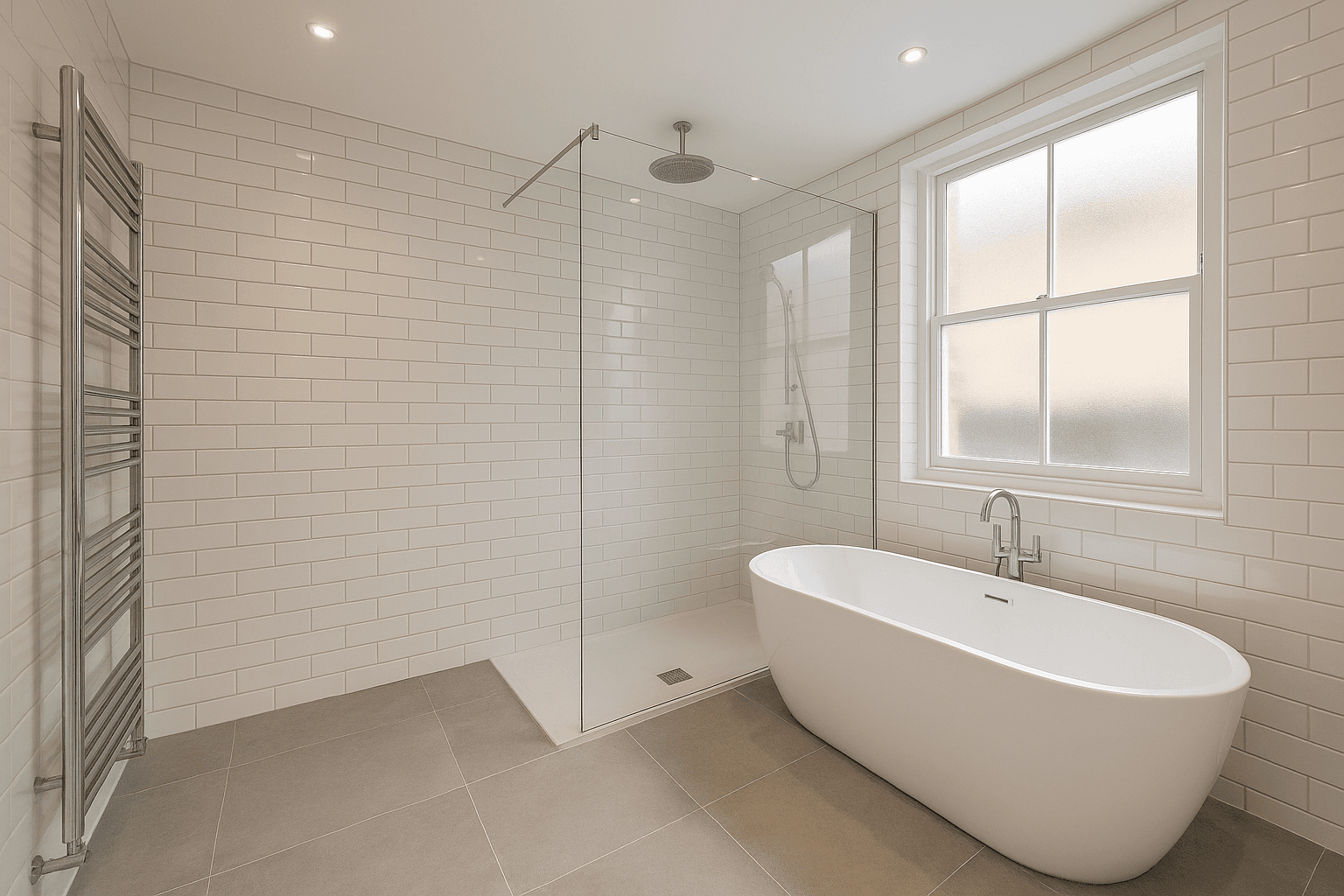
"Should I go with a wet room or a normal bathroom?" I get asked this at least once a week. The answer is honestly: it depends on your house, your budget, and how you actually use the space. I've installed both across every type of London property you can think of, and each has genuine advantages. Let me give you the straight comparison so you can decide what's right for you.
What's the Actual Difference?
A traditional bathroom has a bath or shower tray that contains the water. A wet room has a fully waterproofed, open floor with a drain, so water flows freely across the room and into a gradient drain. The entire room is the shower, essentially.
It sounds simple, but that difference changes everything about how the room is constructed, waterproofed, and maintained. Here's the honest comparison:
| Factor | Traditional Bathroom | Wet Room |
|---|---|---|
| Installation cost | £8,000 – £15,000 | £12,000 – £22,000 |
| Waterproofing | Shower area only | Entire room (walls and floor) |
| Floor gradient | Not required | Essential (1:80 minimum fall to drain) |
| Feel and space | Defined zones | Open, spacious, hotel-like |
| Accessibility | Step into bath or over tray | Level access, wheelchair-friendly |
| Maintenance | Standard cleaning | More frequent squeegee/drying needed |
| Resale value | Universal appeal | Attractive; some buyers want a bath |
| Lifespan of waterproofing | 10–15 years for sealant | 20+ years if tanked properly |
Why Wet Rooms Cost More
The premium isn't the shower: it's the preparation. A wet room needs the entire floor and walls tanked with a liquid-applied waterproof membrane. The floor needs a precise gradient formed in screed or using a pre-formed wet room tray. If the floor joists are timber (which they are in most London houses), we also need to ensure the structure can handle the extra weight of the screed and the water sitting on the surface.
Here's a rough breakdown of where the extra cost comes from compared to a traditional bathroom:
- Tanking membrane: £500–£1,000 (materials and application)
- Floor gradient formation: £800–£1,500 (screed or tray system)
- Linear drain: £250–£600 (compared to a £30 shower waste)
- Additional tiling: £400–£800 (entire floor is tiled, not just shower area)
- Structural reinforcement: £0–£1,500 (depends on existing floor)
💡 Builder's Truth: I've ripped out wet rooms that were installed badly by other builders. The number one failure? Skipping the tanking. If the waterproof membrane isn't applied properly, water seeps through the grout into the subfloor. In a timber-floored London terrace, that means rotten joists within 2–3 years. A proper tanking system costs £800–£1,500 but it's the entire point of a wet room. Never let anyone skip it.
When a Wet Room Is a Great Idea
- Small en-suites: If your en-suite is under 3 square metres, a wet room eliminates the shower tray that eats into floor space. The room feels twice as big.
- Accessibility needs: Level access makes wet rooms ideal for elderly relatives or anyone with mobility issues. No step, no door to wrestle with, space for a shower seat.
- Loft conversions: Many of the loft conversion en-suites I build are wet rooms because the room shapes are awkward. Sloping ceilings and tight corners work much better without a shower enclosure.
- Modern aesthetic: If you want that hotel-spa look, nothing beats a wet room with a rain shower head, large format tiles, and a linear drain.
- Concrete floors: Ground floor or basement bathrooms with concrete subfloors are ideal for wet rooms because you don't have timber rot concerns.
When a Wet Room Is a Bad Idea
I'll be straight with you: I talk clients out of wet rooms about a third of the time. Here's when I'd advise against it:
- Your only bathroom: If it's your main family bathroom, you probably want a bath. Families with children need baths. Removing the only bath in a house also hurts resale value, particularly in family areas like Bromley, Lewisham, and Walthamstow.
- Old timber floors without reinforcement: If the floor bounces when you walk across it, it's not suitable for a wet room without significant structural work. The floor needs to be rigid or the tanking will crack.
- Poor drainage access: Wet rooms need a drain set into the floor at a low point. If your waste pipe runs horizontally with minimal fall, getting adequate drainage can be difficult or require raising the entire floor.
- Budget is tight: A traditional bathroom with a quality shower tray and glass enclosure looks equally good at £3,000–£5,000 less. You lose the open feel, but you gain a bath and lower maintenance.
💡 Builder's Truth: The biggest misconception about wet rooms? That the whole bathroom stays wet. A well-designed wet room has a glass partition or screen that keeps the splash zone contained. Without one, everything in the room gets damp every time you shower: toilet rolls, towels, the lot. Always include a screen.
Maintenance: What to Expect Day-to-Day
Traditional bathrooms need the usual: clean the grout, reseal around the bath every couple of years, descale the shower head. Nothing out of the ordinary.
Wet rooms need a bit more attention. The open floor means water sits on the tiles until it drains. In practice, this means:
- Squeegee the floor after each shower to prevent limescale buildup
- Clean the linear drain monthly (hair and soap scum collect in the trap)
- Check the silicone seals around the drain and at wall junctions annually
- Ensure ventilation is adequate (extract fan must be rated for the room volume)
None of this is difficult, but if you're the sort of person who wants zero maintenance, a wet room isn't the answer. A shower tray with a glass enclosure is: contained, easy to clean, and the water goes where it should every time.
My Recommendation
For most London homeowners, I recommend this approach:
- Main family bathroom: Traditional layout with a bath, good shower over or separate enclosure. Keep the bath.
- Second bathroom or en-suite: Wet room or walk-in shower. This is where the luxury feel adds the most value without losing functionality.
- Loft en-suite: Wet room almost every time. The awkward shapes work in your favour.
For full costs of bathroom projects, see my bathroom renovation cost guide. And if you're comparing a bathroom refresh against other home improvements, my guide to bathroom upgrades covers the full scope of what we offer.
Not Sure Which Route to Take?
Send me a couple of photos of your current bathroom and tell me what you're hoping to achieve. I'll give you an honest view on whether a wet room makes sense for your property, or whether a traditional layout is the smarter move. No obligation, no sales pitch.
Chat with Pimi on WhatsAppWe typically reply within minutes during working hours.
Ready to discuss your project?
Whether you are just exploring ideas or ready to get started, Pimi and the crew are happy to help. With more than 27 years in the business and 120 plus projects delivered, they can guide you at any stage of your journey.
No hard sell and no obligation, just straightforward advice from a team that goes above and beyond.
- Answer questions about costs, timelines and feasibility
- Provide ballpark price ranges based on your requirements
- Explain the process before you commit to anything
- Arrange a free site visit if you want to move forward